RESEARCH DETAILS
Our research topics in detail
Carrier Ions We Work With
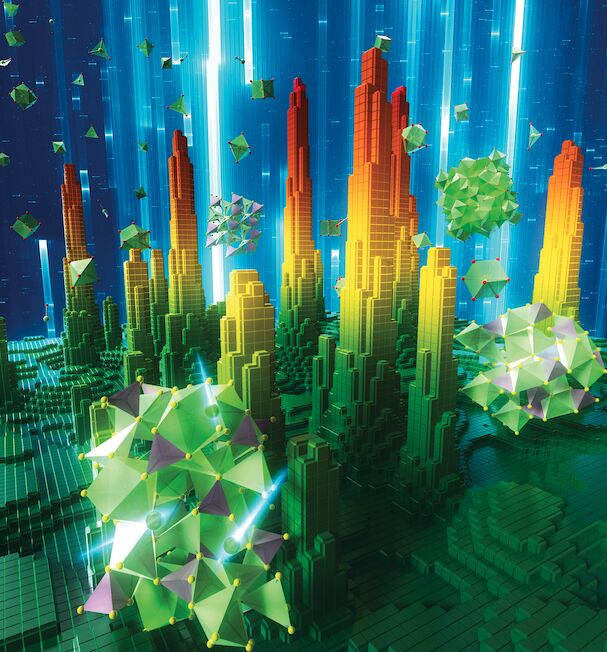
Exploration of Lithium Ion Conductors
Putting all-solid-state lithium-ion batteries into practical use urgently requires new solid electrolytes that combine high ionic conductivity with chemical stability. We search for such materials efficiently by combining materials informatics with experiments.
Achievements:
- • Discovery of new Li+ conductors with machine learning models that use coordination-polyhedron motifs as features (published in JACS)
- • Exploration of diverse material systems, including sulfides and oxides
Exploration of Fluoride Ion Conductors
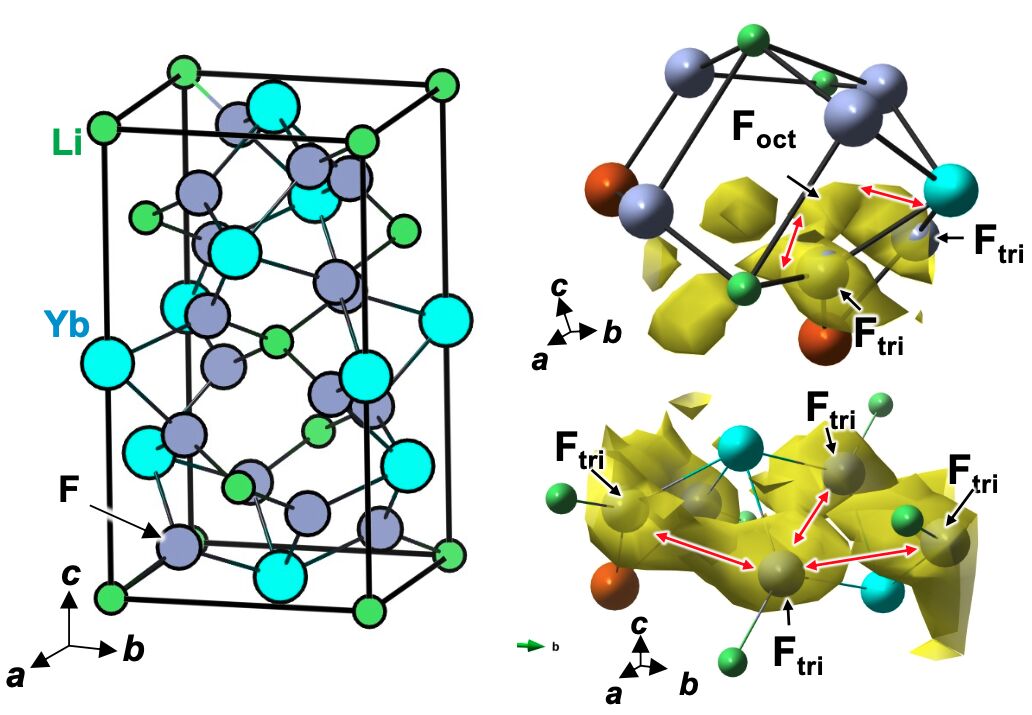
Fluoride batteries are attracting attention as next-generation energy storage devices with a higher theoretical energy density than lithium batteries. Realizing them requires solid electrolytes in which fluoride ions can move rapidly through the solid.
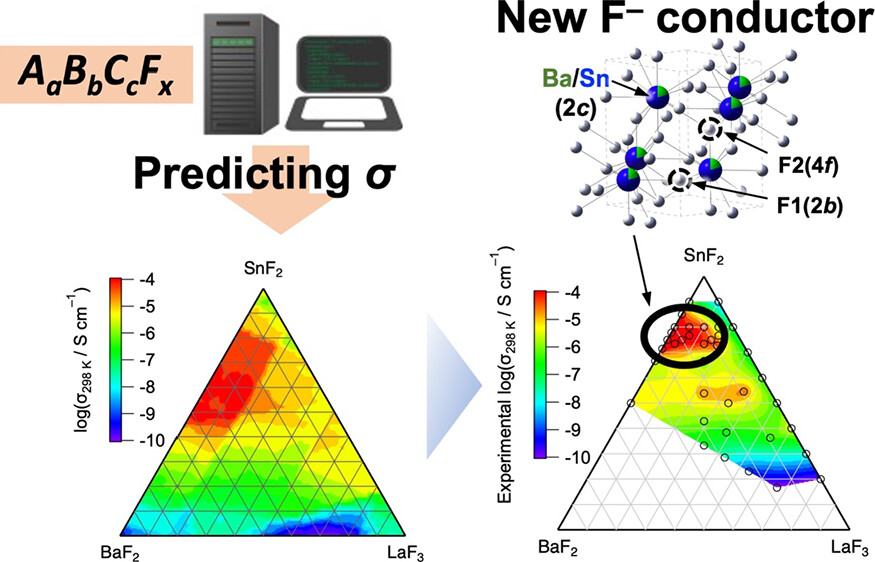
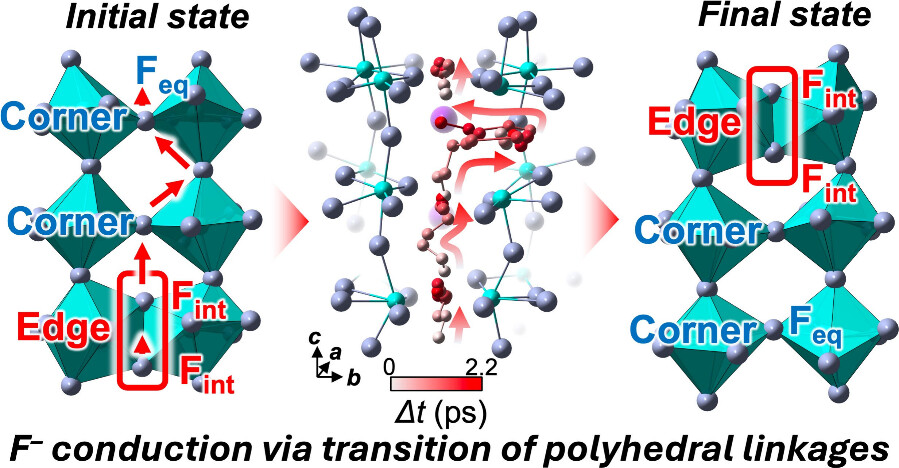
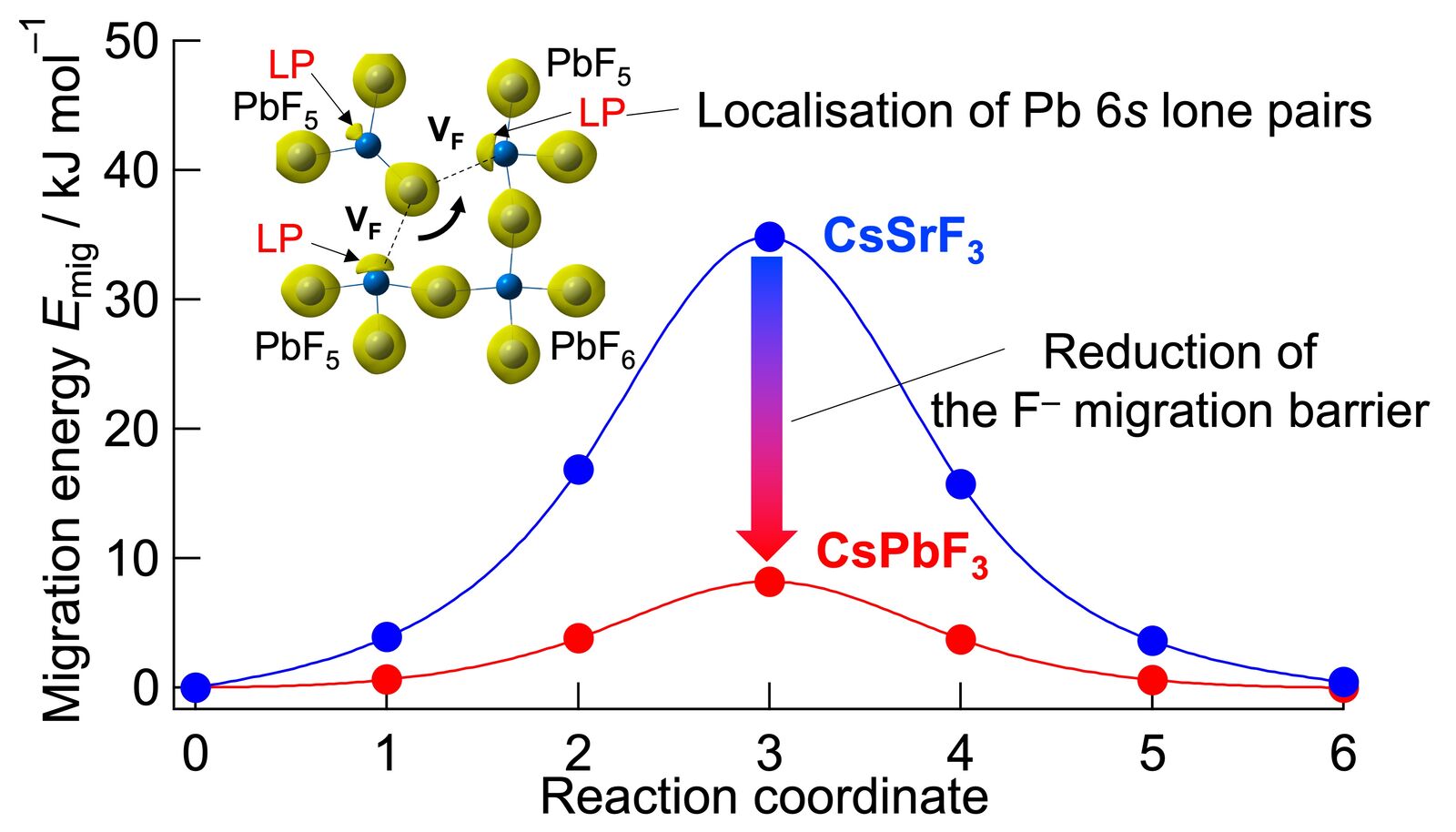
We search for new fluoride ion conductors and work to clarify their conduction mechanisms. In particular, we are developing solid electrolytes that combine electrochemical stability with ionic conductivity, as well as lone-pair-containing fluoride ion conductors that show extremely high ionic conductivity.
Main Achievements:
- • Extremely low activation energy (7.9 kJ mol−1) achieved in CsPb0.9K0.1F2.9
- • First demonstration that dynamic reorientation of lone pairs promotes ion transport
- • New Sn-based tysonite-type materials with ionic conductivity above 10−4 S cm−1 at room temperature
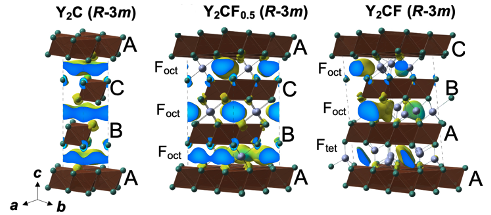
- • Y2C↔Y2CF2 anode active material with reversible F− intercalation
Exploration of Hydride Ion Conducting Materials and Devices
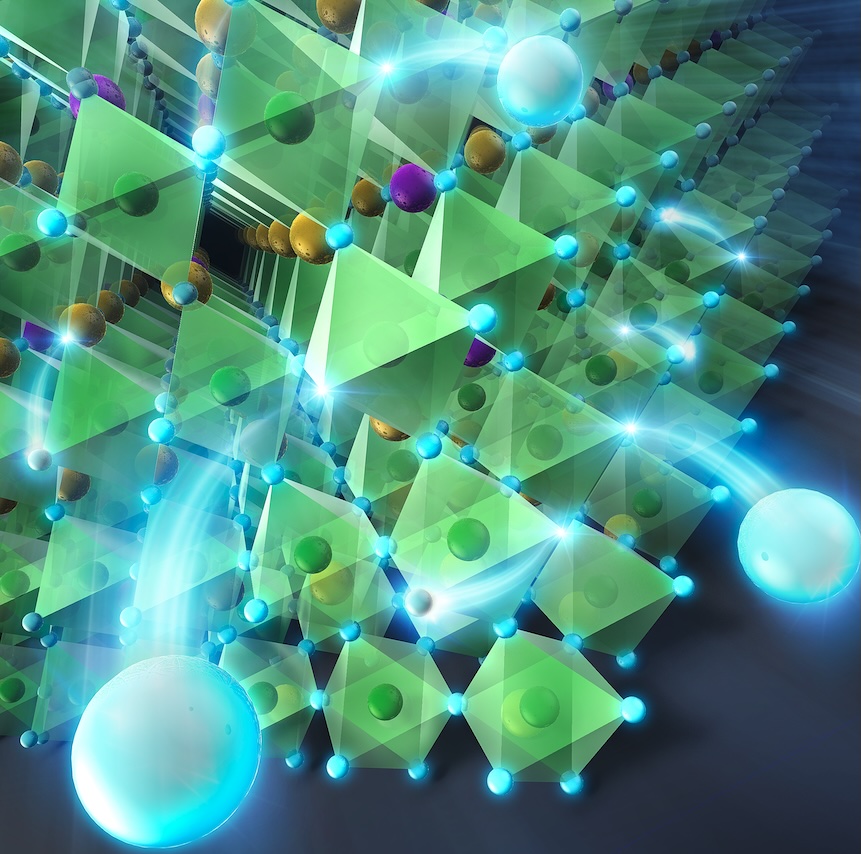
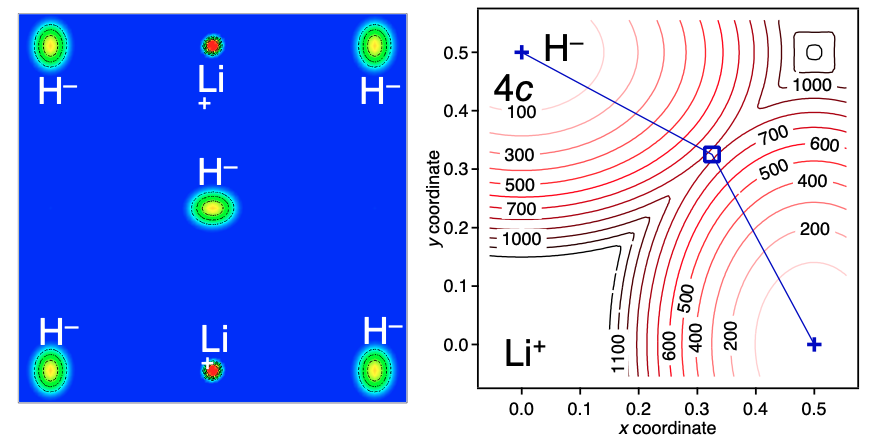
We are developing new energy devices that use hydride ions (H−), the negative ions of hydrogen, as charge carriers. Hydride ion conductors are expected to enable new battery systems that exploit the fast conduction and unique reactivity of hydride ions.
Research Contents:
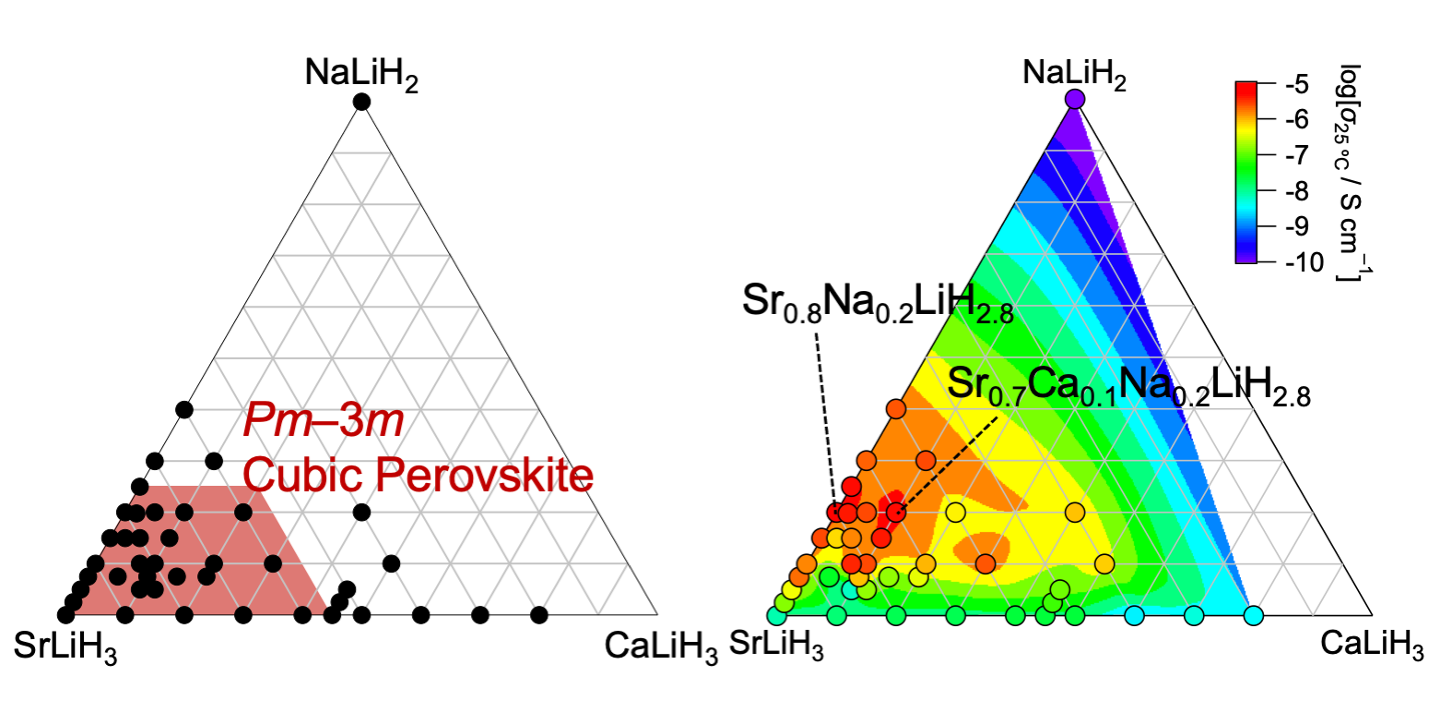
- • Perovskite-type hydride conductors: new compositions based on SrLiH3
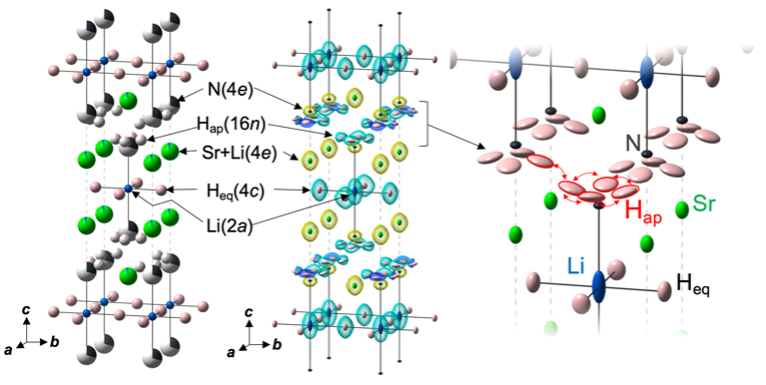
- • Hydride ion conduction in Sr2LiH2N
- • K2NiF4-type oxyhydrides: an ambient-pressure synthesis route for La2LiHO3
Exploration of Anion Intercalation Electrodes
In contrast to conventional cation (Li+, Na+, etc.) intercalation, we are developing electrode materials into which anions (F−, Cl−, etc.) are reversibly inserted and extracted. By building new battery systems, we aim to achieve higher energy densities.
Achievements:
- • Demonstration of reversible fluoride-ion intercalation in Y2C↔Y2CF2
- • Carbide-based materials as new anode active materials
- • Application to fluoride batteries
Exploration Using Machine Learning and Virtual Space
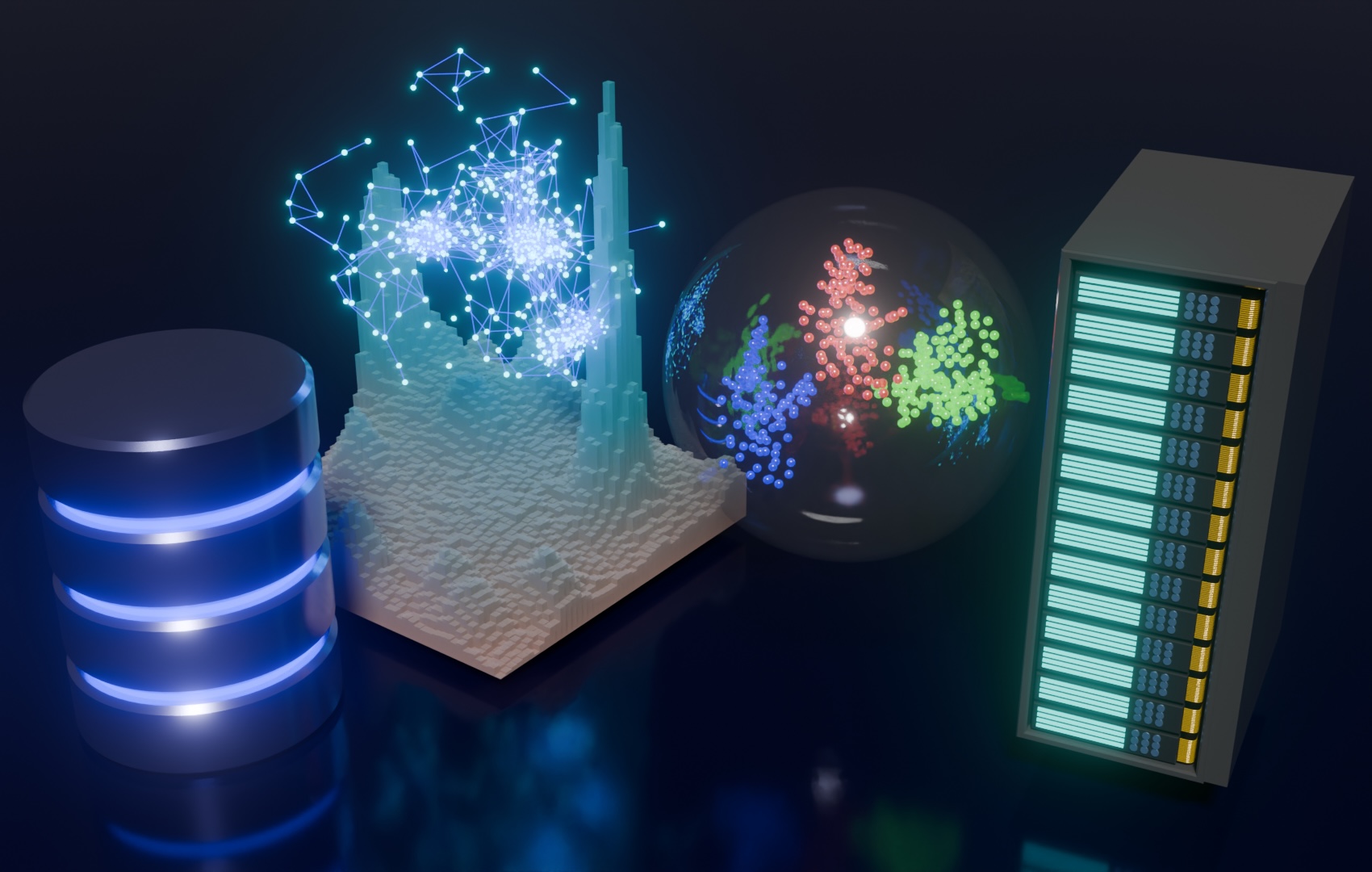
Combining materials informatics and computational chemistry, we develop machine-learning methods to search for new ion conductors efficiently. Designing materials from both the experimental and theoretical sides makes conventional trial-and-error searches far more efficient.
Approach:
- • Machine learning models that use coordination-polyhedron motifs as features
- • Analysis of conduction mechanisms by first-principles calculations
- • Molecular dynamics simulations with neural network potentials
High-Throughput Synthesis
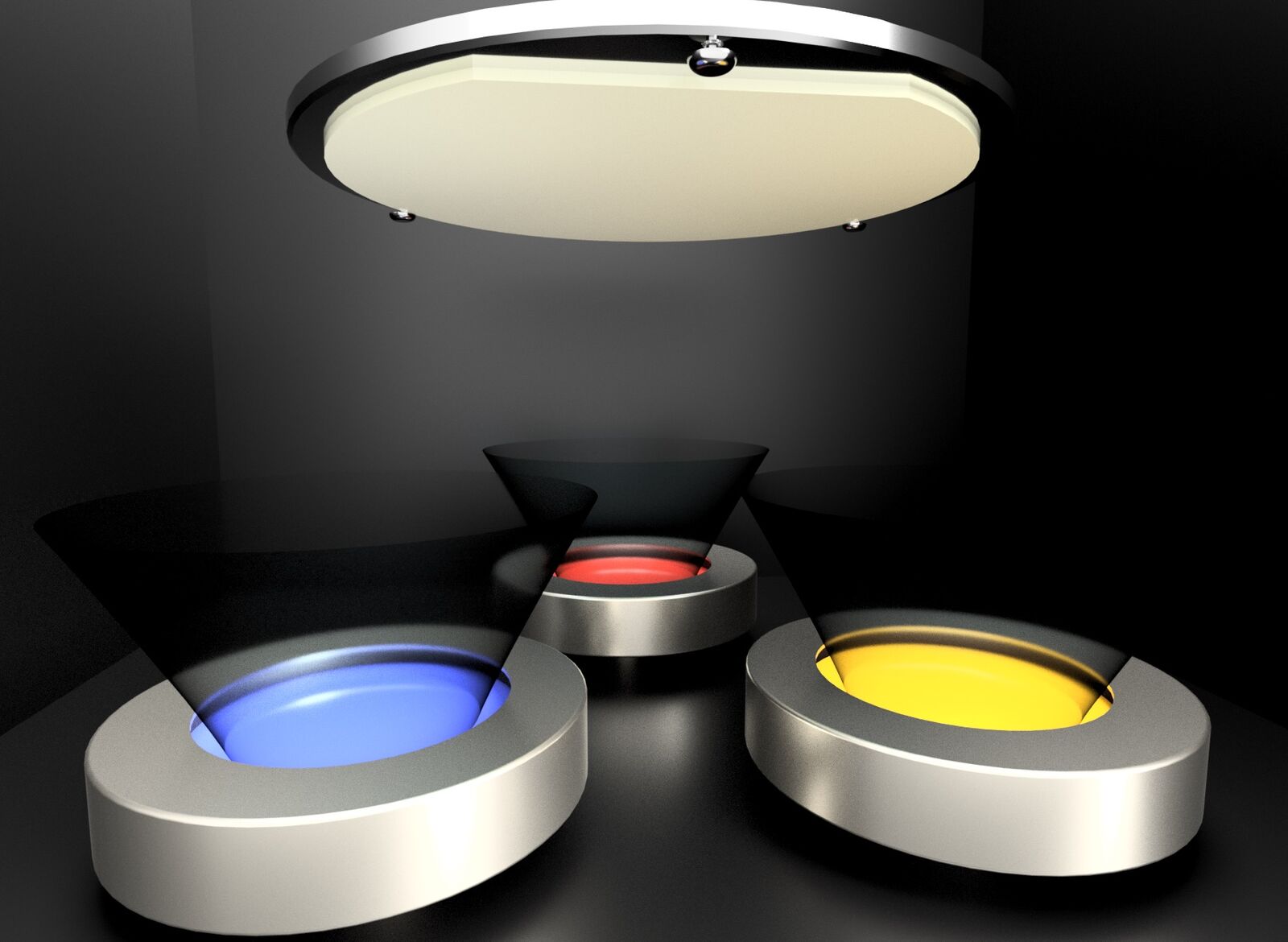
By combining combinatorial synthesis with high-throughput evaluation, we explore materials far faster than conventional methods allow. Synthesizing and evaluating many compositions at once greatly raises the chance of discovering new materials.
Methods:
- • Rapid composition optimization with composition-gradient thin films
- • Automated synthesis and evaluation systems
- • High-speed screening by impedance measurements